



Green Roof.
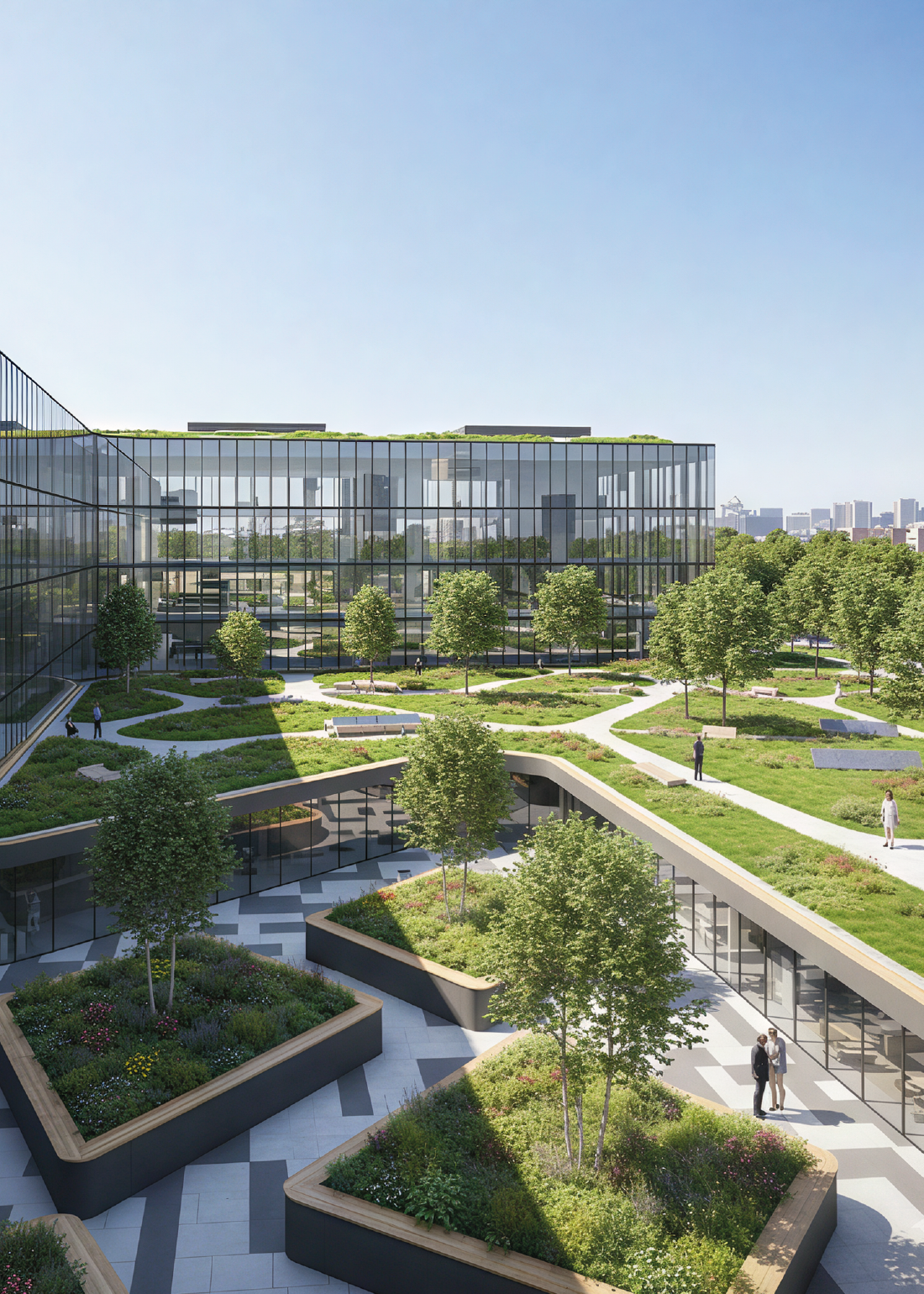
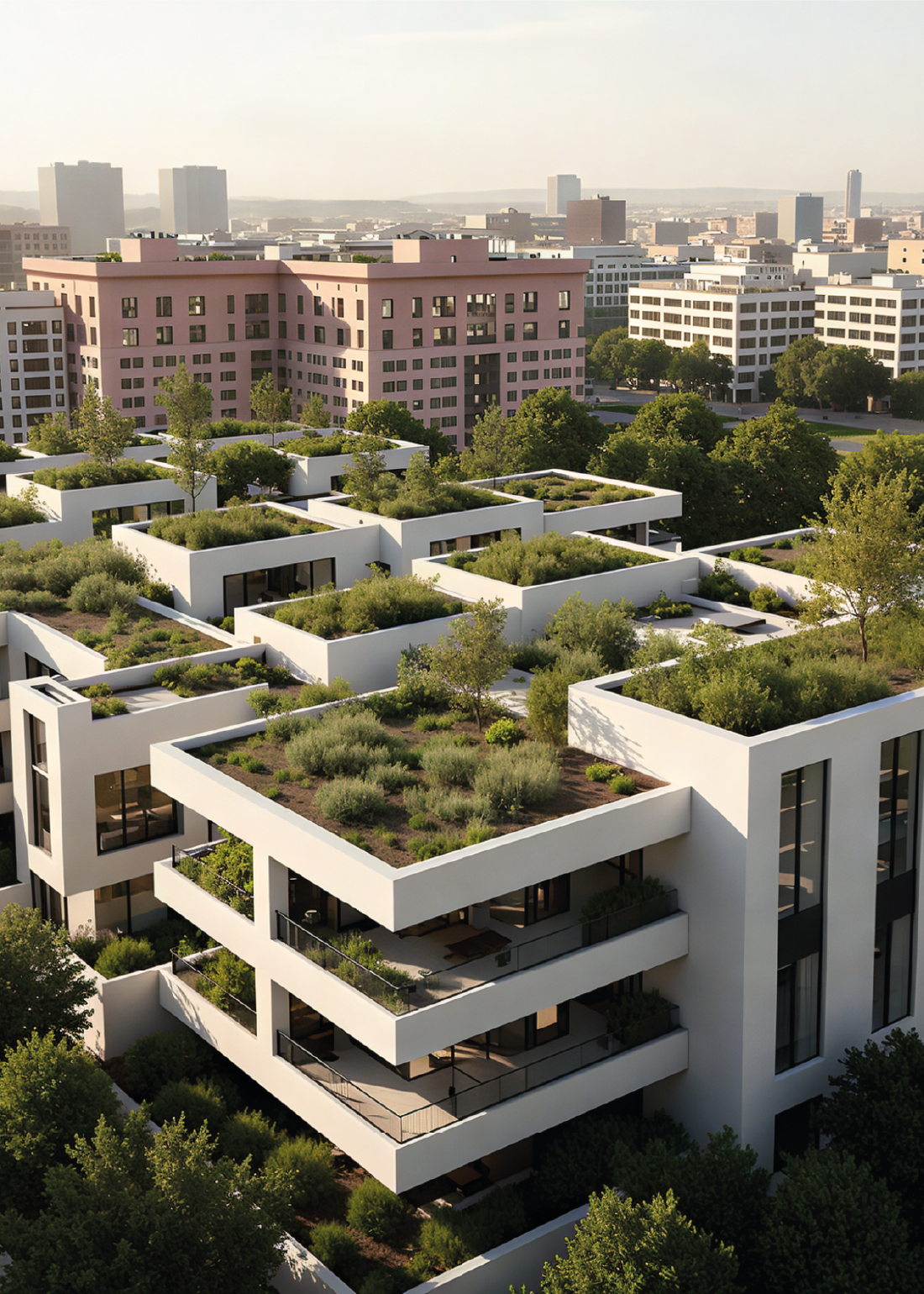
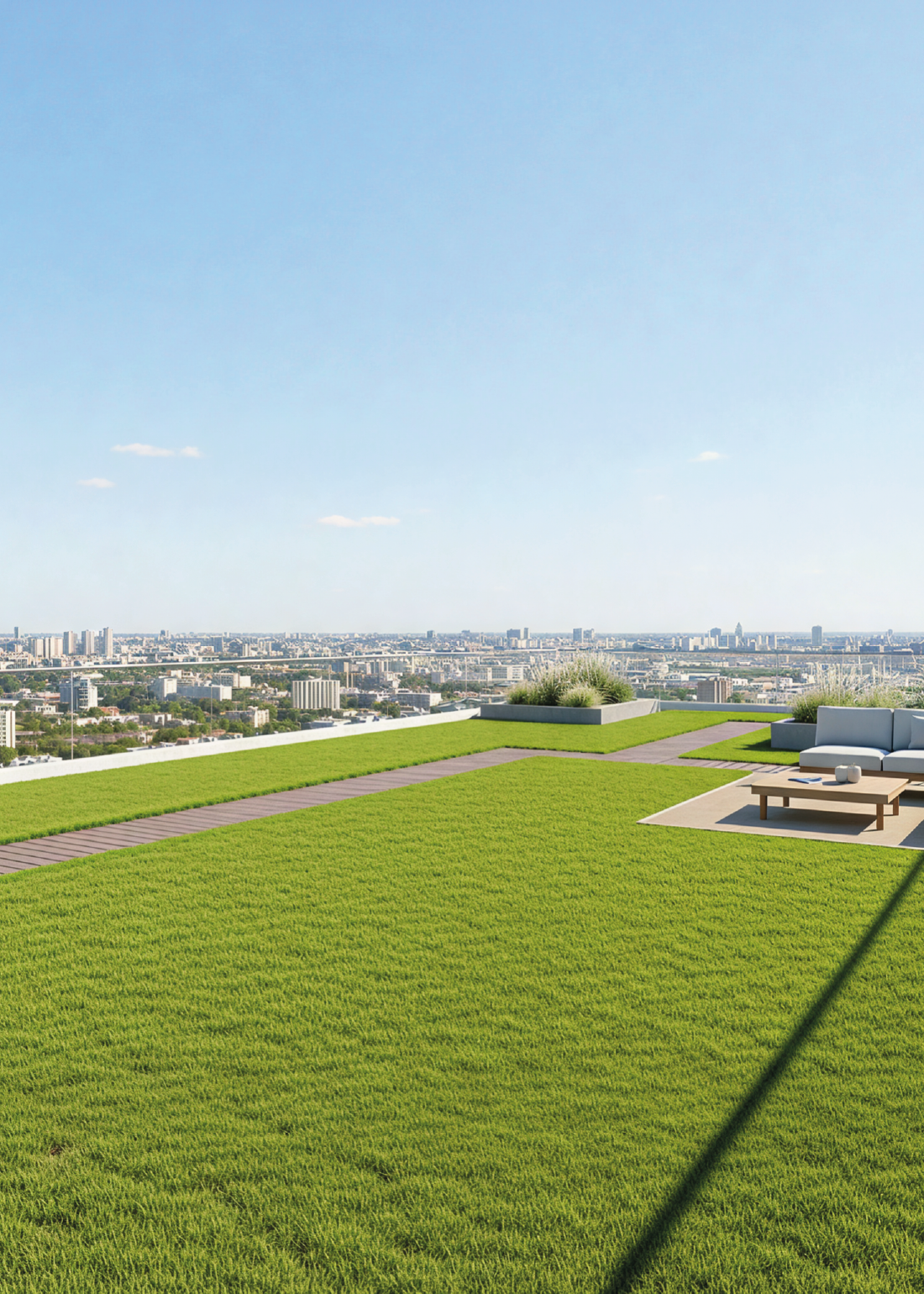
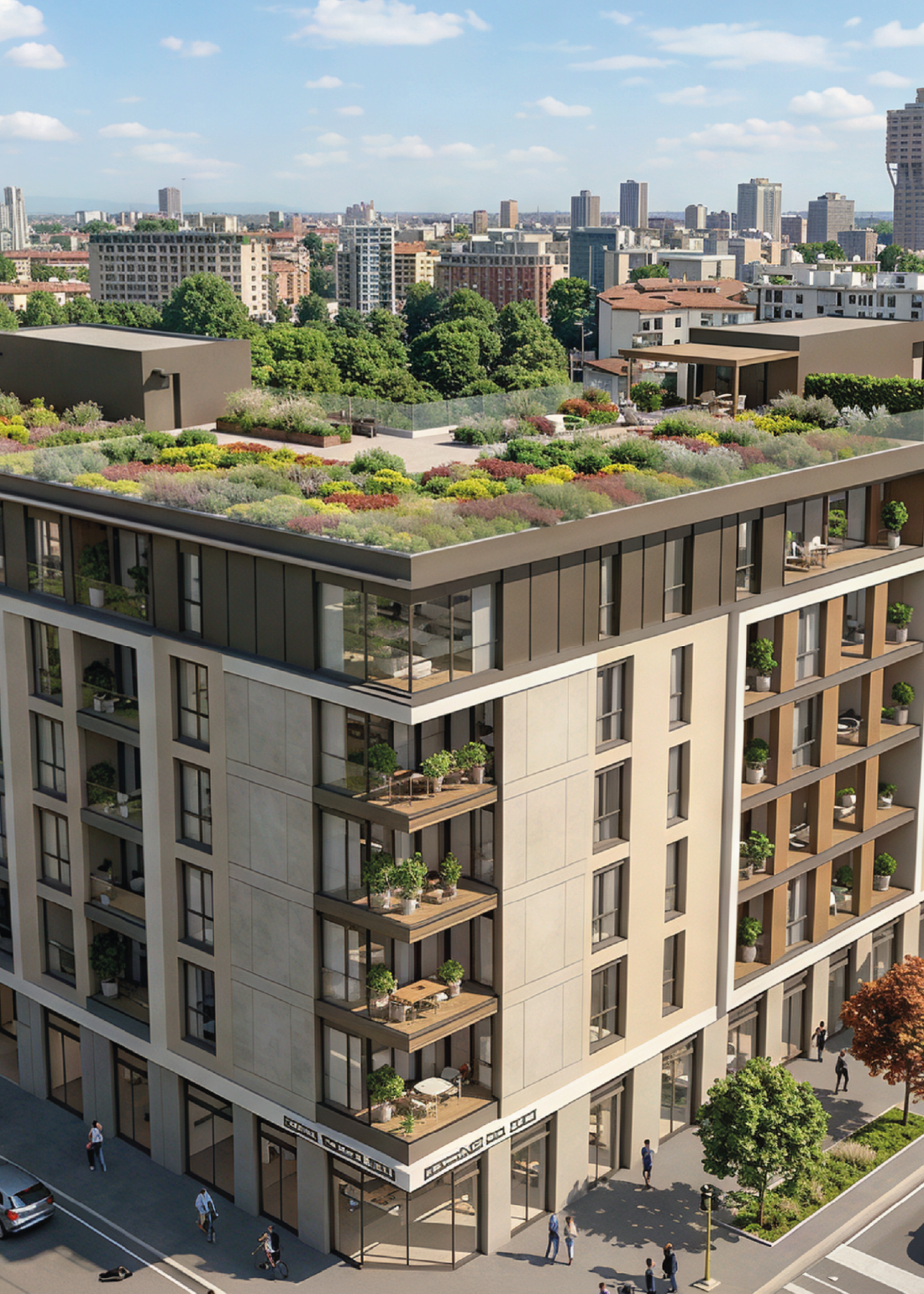
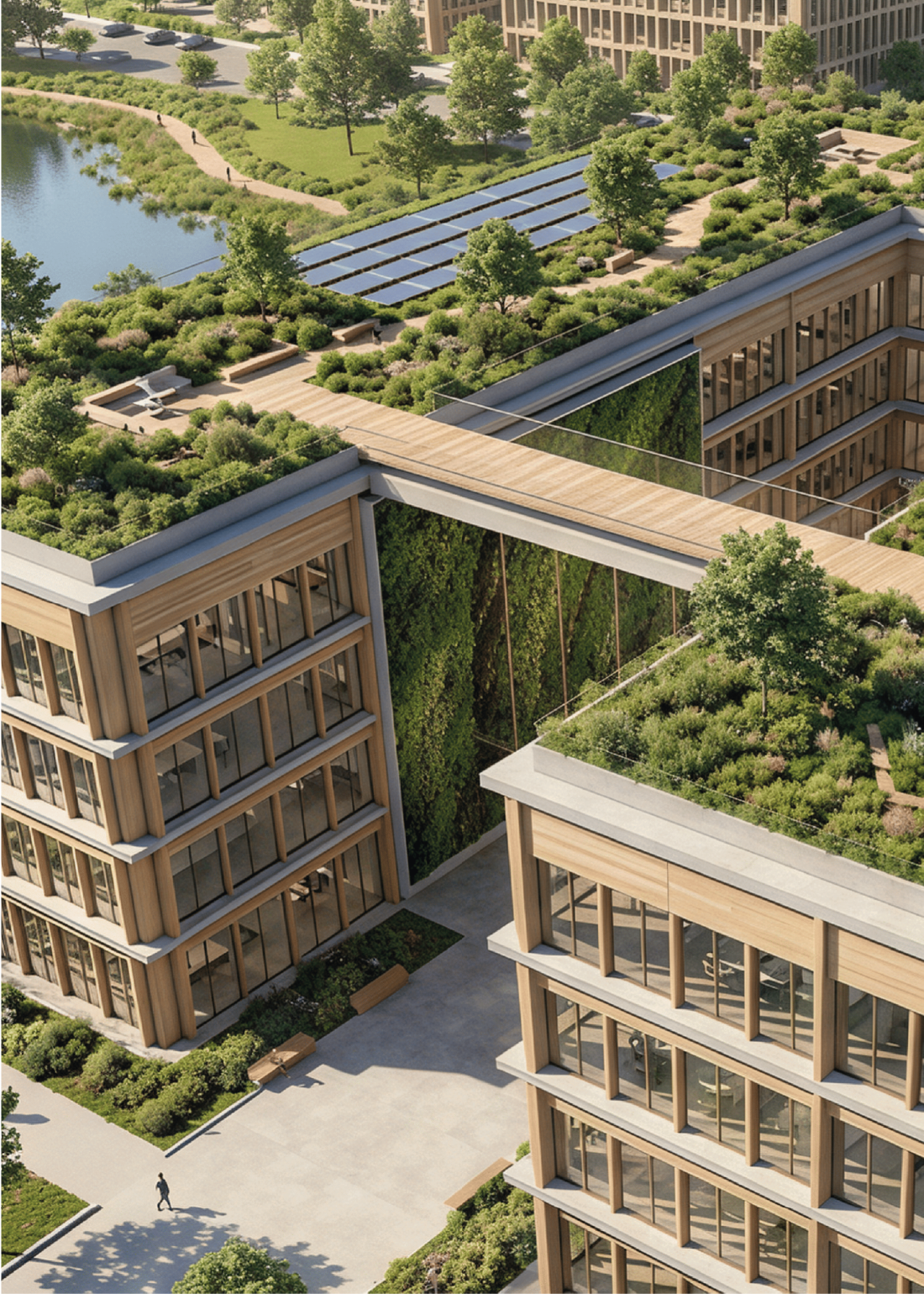
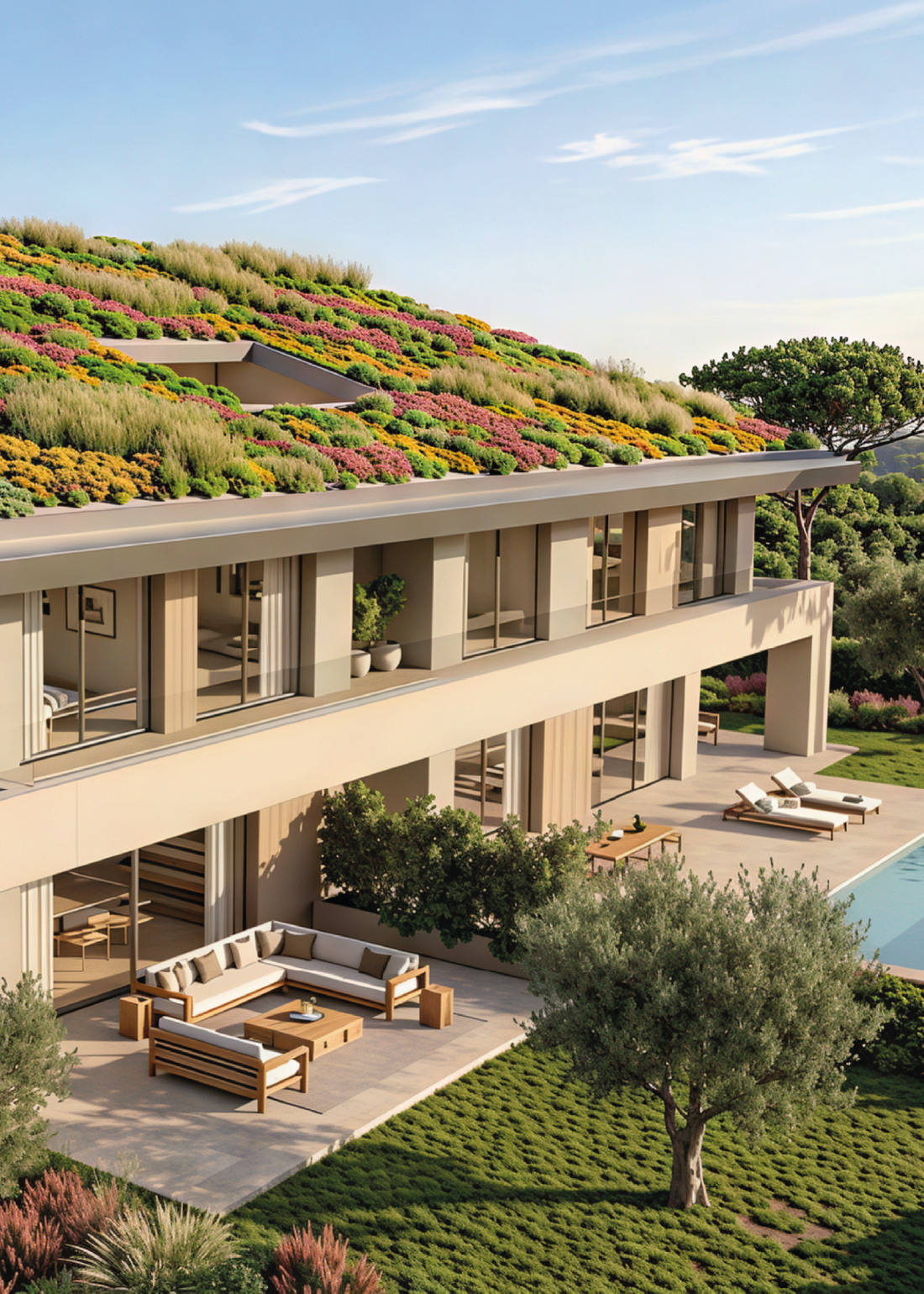
Green roofs are a sustainable solution that improves thermal insulation, supports rainwater management, and enhances architectural spaces, providing long-lasting greenery with low maintenance.
VerdeProfilo® offers green roof systems for a complete roof build-up, from the protection layers above the waterproofing membrane to the substrate and the plants. There are three types to choose from, extensive, semi-intensive and intensive, depending on the load the roof slab can bear and on how the roof will be used.
System.
Extensive.
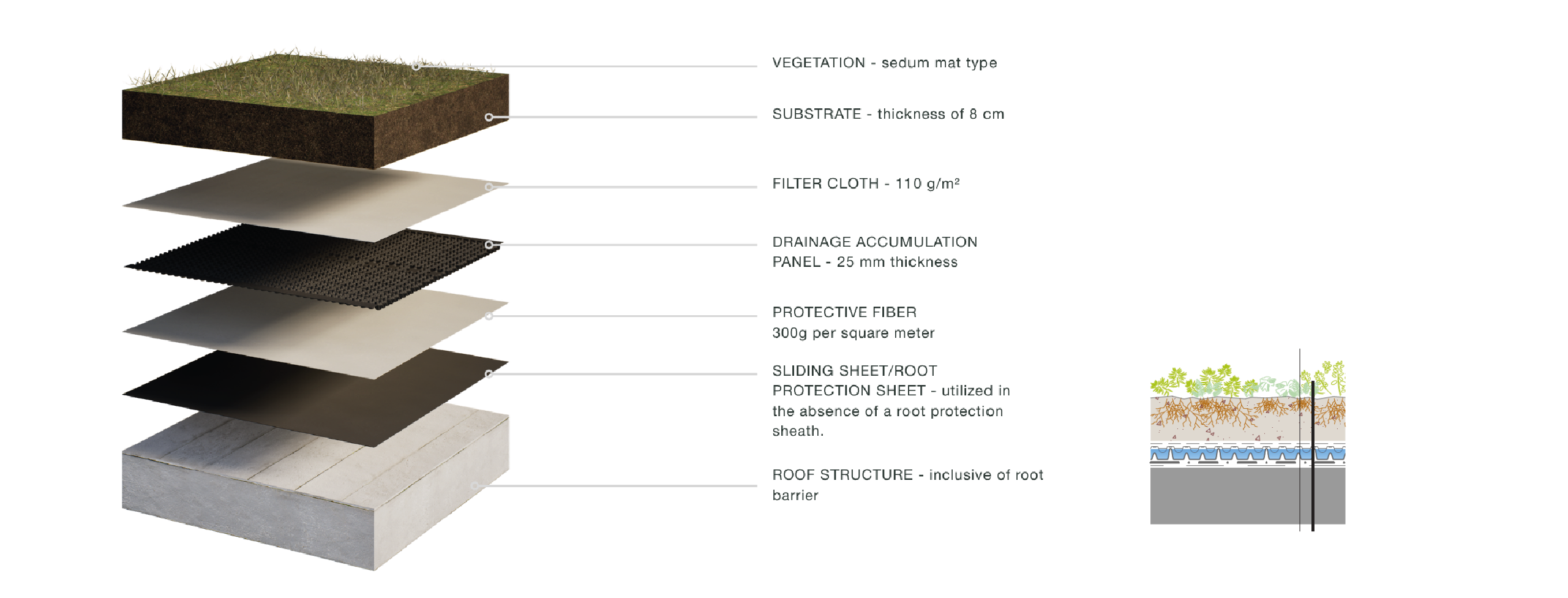
The system is designed to meet ecological requirements even in complex contexts, such as buildings with limited load-bearing capacity or non-accessible roof surfaces.
In addition to its technical advantages, it acts as an ecological protective layer, helping to:
- improve rainwater management
- enhance the building’s thermal and microclimatic performance
- increase the overall sustainability of the project
Semi-Intensive.
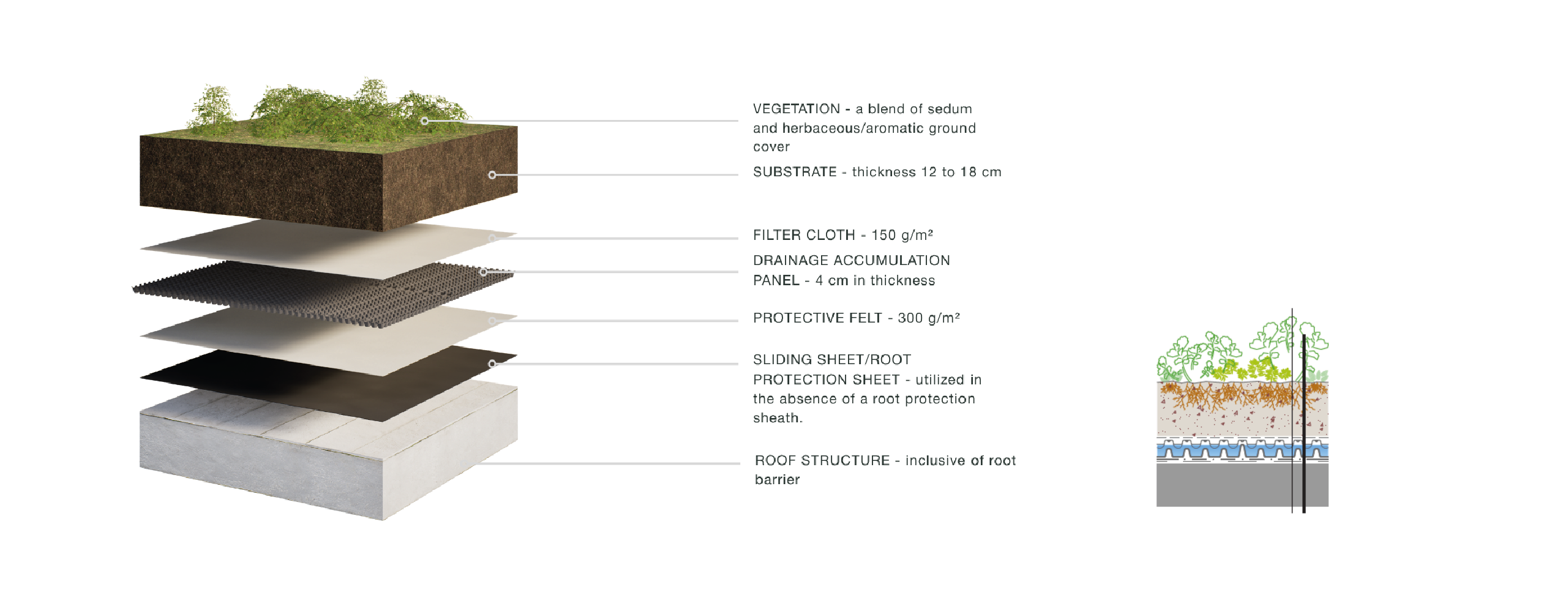
Suitable for green roofs and terraces directly connected to living spaces, offering an attractive, functional, and easy-to-install solution.
Intensive.
Suitable for gardens directly connected to living spaces: the ideal solution for landscape design.
Would you like to receive more information?
Green roof systems: extensive, semi-intensive and intensive
A green roof brings vegetation onto the roofs of buildings. Depending on substrate depth, plant type and use of the space, there are three types: extensive, semi-intensive and intensive. The choice depends on the load the roof can bear, on how it will be used and on the planned maintenance.
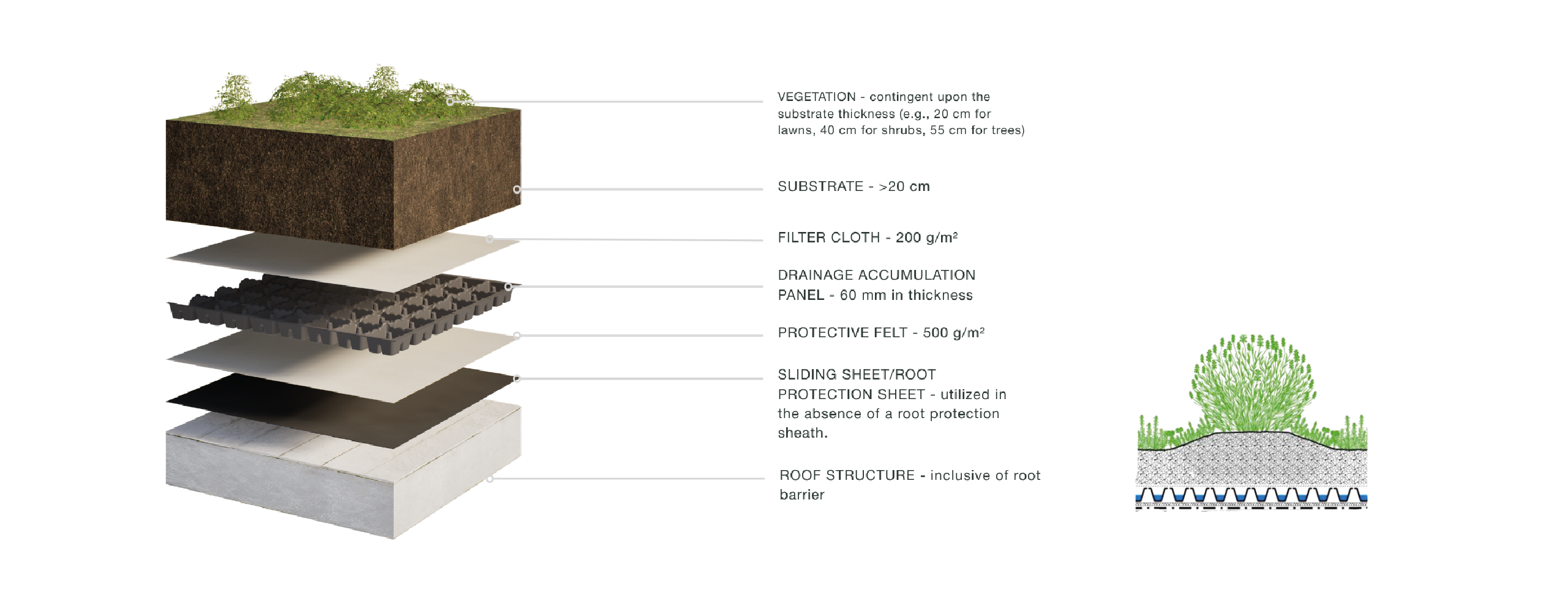
An extensive green roof uses a sedum mat on an 8 cm substrate: it needs minimal maintenance and is not a usable space. Semi-intensive is an intermediate solution, with a mix of sedum, herbaceous plants and aromatic herbs on a 12–18 cm substrate, which also allows areas of different depth, such as small mounds. An intensive green roof is a roof garden: it is usable, needs regular maintenance and has a substrate of more than 20 cm, whose depth depends on the vegetation, for example about 20 cm for a lawn, 40 cm for shrubs and 55 cm for trees.
The three types compared
| Type | Features | Substrate |
|---|---|---|
| Extensive | Not usable, minimal maintenance, sedum mat | 8 cm |
| Semi-intensive | Intermediate solution, mix of sedum, herbaceous plants and aromatic herbs | 12–18 cm |
| Intensive | Usable, for example as a lawn; needs regular maintenance | Over 20 cm |
How a green roof is built: the layers
A green roof is a package of layers laid on top of the roof structure, including its waterproofing membrane. If the membrane is not already root-resistant, a slip sheet with root barrier goes down first; then a protection fleece and the water storage and drainage panel, a cellular element that holds water and drains off the excess. A filter sheet stops soil from washing down into the panel; on top go the substrate and finally the vegetation. Thicknesses and weights vary with the type, as shown in the drawings of the three types above.
The substrate is a pumice-lightened soil, much lighter than ordinary topsoil; the load on the roof slab must still be checked at the design stage. On pitched roofs, dedicated anchoring systems keep the soil from sliding. Drains, grilles and finishing accessories complete the package. In Italy, the design of green roofs refers to the UNI 11235 standard.
Why choose a green roof
Compared with a conventional roof, a green roof improves the look of the building and becomes part of its thermal insulation package. It also retains part of the rainwater and releases it slowly, instead of sending it straight to the gutters: an increasingly relevant feature with heavy rainfall.
A green roof completes the building envelope together with green walls: those designing a façade with a VP Modulo green wall system can extend the same approach to the roof, and on usable terraces the Green Wave modular planters frame and furnish the space.
Frequently asked questions about green roofs
What is a green roof?
A green roof is a roof covered with a layer of vegetation, laid on top of the building's waterproofing together with sheets and panels that protect it, store water and drain it. There are three types: extensive, not usable and planted with succulents such as sedum; intensive, usable like a garden; and semi-intensive, an intermediate solution. Besides its appearance, a green roof contributes to the building's thermal insulation and retains part of the rainwater.
How is a green roof built?
On top of the roof's waterproofing membrane, the following are laid in order: a slip sheet with root barrier (if the membrane is not already root-resistant), a protection fleece, a water storage and drainage panel that holds water, a filter sheet, the substrate and finally the plants. The substrate is a pumice-lightened soil, lighter than ordinary topsoil. Before installation, the load the roof slab can bear must still be checked. On pitched roofs, anchoring systems are used to keep the soil from sliding.
What is the difference between an accessible and a non-accessible green roof?
A non-accessible green roof is an extensive one: it has an 8 cm substrate, a sedum mat and minimal maintenance, but it is not a space to be used. An accessible green roof is an intensive one: a roof garden, for example a lawn, with a substrate of more than 20 cm, which needs regular maintenance. Semi-intensive is in between, with a 12–18 cm substrate. In any case, whether a roof can be made usable depends not only on the type of green roof but also on the structural capacity of the slab and on its intended use.