



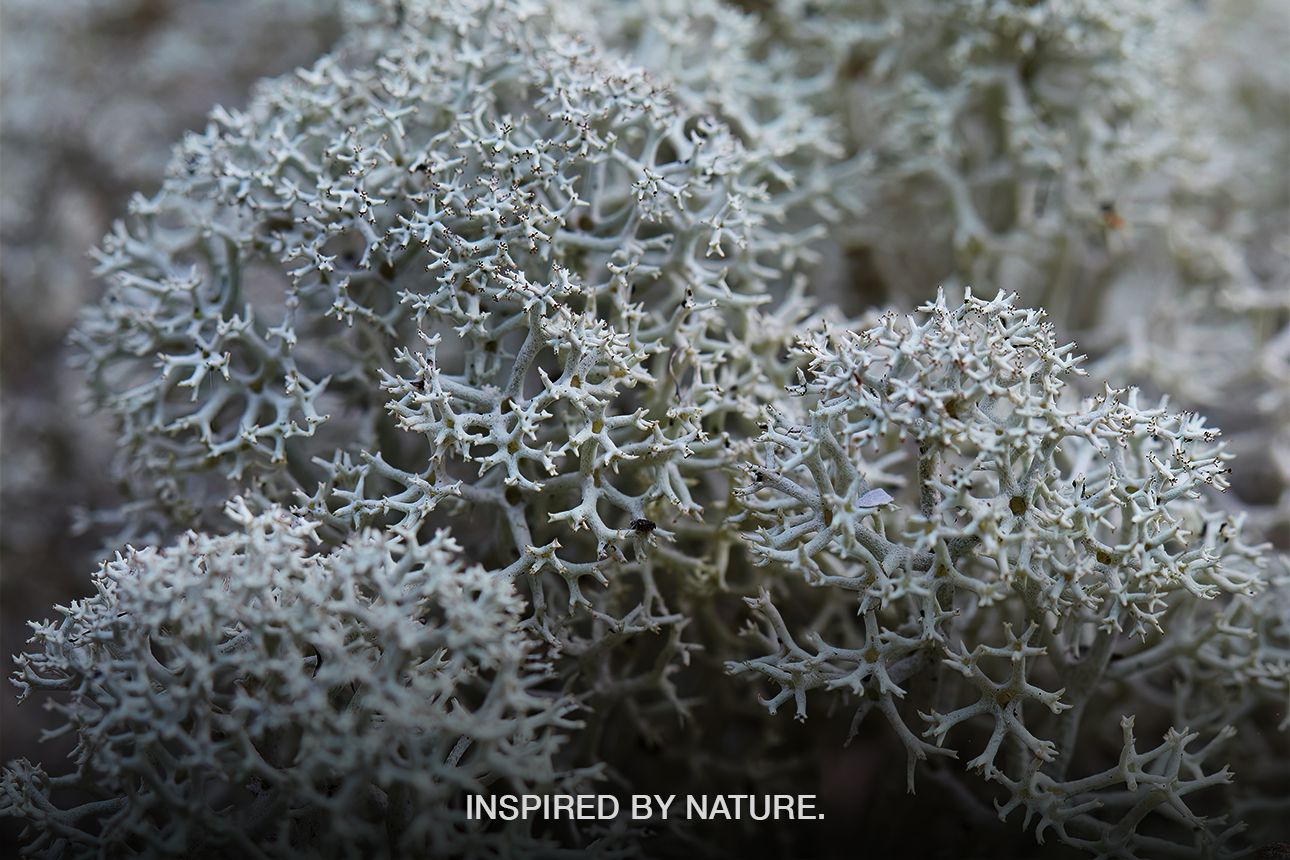
In recent years, the growing focus on sustainability, wellbeing, and biophilic design has transformed the way contemporary spaces are conceived and designed. Among the most appreciated natural solutions is Cladonia Stellaris, a stabilized lichen that brings nature indoors, combining aesthetics, sustainability, and design freedom.
From Nordic forests to interior design projects, Cladonia Stellaris tells a story in which nature becomes an integral part of architecture. Thanks to the stabilization process and its ability to be integrated into systems such as MOSSwall®, this natural element preserves its original appearance over time, becoming the centerpiece of green walls, decorative installations, and design solutions that enhance offices, hotels, commercial spaces, and residential environments.
From the forest to design: The journey of Cladonia Stellaris
A natural material with unique characteristics
Cladonia Stellaris is a lichen belonging to the Cladoniaceae family, valued for its soft, three-dimensional structure and its distinctive light green color with natural variations. It grows slowly in the boreal forests of Northern Europe, within pristine ecosystems where it plays an important role as an indicator of environmental quality.
After harvesting, which takes place in accordance with natural cycles and local regulations, the lichen undergoes a stabilization process that allows it to maintain its elasticity, color, and texture for many years. This characteristic makes it an ideal raw material for interior design and for creating decorative green walls that require no maintenance.
How stabilized lichen is created
Unlike natural lichen, stabilized Cladonia Stellaris undergoes a process in which its natural internal moisture is replaced with a solution based on glycerin and natural pigments. This allows it to preserve its appearance over time without continuing its biological cycle.
The result is a natural element that requires no irrigation, direct sunlight, pruning, or fertilizers, giving designers the freedom to introduce greenery into indoor spaces with maximum creative flexibility.
Why Cladonia Stellaris is finding its place in contemporary architecture
Natural beauty and design freedom
One of the reasons Cladonia Stellaris is increasingly featured in interior design projects is its extraordinary versatility. Its organic forms and three-dimensional appearance allow the creation of natural surfaces that interact beautifully with modern architecture, minimalist environments, hospitality spaces, and corporate settings.
Designers use it to create decorative walls, green company logos, artistic panels, statement installations, and interior details that introduce a natural element without altering the architectural language of the project.
When sustainability and design speak the same language
The value of Cladonia Stellaris lies not only in its aesthetics. Thanks to the stabilization process, it allows nature to be introduced into indoor environments without the need for water consumption, fertilizers, or regular maintenance.
The lichen is harvested through responsible practices and then carefully processed to preserve its aesthetic qualities. For this reason, it represents a solution aligned with the principles of sustainable design and biophilic design, helping to create more welcoming environments with a strong visual connection to nature.
From natural material to interior design project
Where Cladonia Stellaris takes shape
The applications of Cladonia Stellaris are numerous, allowing it to enhance different types of spaces.
- Stabilized lichen green walls:
An ideal solution for creating natural surfaces with a strong visual impact in offices, reception areas, hotels, showrooms, and commercial spaces. - Decorative elements and artistic compositions:
Lichen can be incorporated into frames, panels, or customized installations, transforming a wall into a distinctive feature of the project. - Workspaces and hospitality environments:
Cladonia Stellaris helps create relaxing and welcoming atmospheres, strengthening the connection between nature, design, and perceived wellbeing.
Thanks to its flexibility, it fits into residential settings, offices, restaurants, hotels, and public spaces, naturally adapting to the different languages of contemporary architecture.
Green that lasts over time, without maintenance
One of the main advantages of Cladonia Stellaris is that it requires no routine maintenance. To preserve its appearance at its best, it is sufficient to follow a few simple guidelines:
- Avoid any form of watering or direct contact with water.
- Do not expose the lichen to direct sunlight for extended periods.
- Whenever possible, maintain indoor relative humidity between 40% and 60%.
- Remove any dust using a soft brush or dry cloth, avoiding detergents or chemical products.
Frequently asked questions about Cladonia Stellaris
Is Cladonia Stellaris a moss?
No. Although it is often associated with moss due to its soft and compact appearance, Cladonia Stellaris is a lichen. Lichens are organisms created through a symbiotic relationship between a fungus and an alga (or cyanobacterium) and have different biological characteristics from mosses. Its three-dimensional structure and natural appearance are precisely what make it highly appreciated for decorative green wall applications.
How long does Cladonia Stellaris last?
When installed correctly and kept in suitable environmental conditions, Cladonia Stellaris can preserve its natural appearance for many years. The stabilization process allows it to maintain its softness, color, and three-dimensionality without requiring maintenance.
In which environments can Cladonia Stellaris be used?
Stabilized Cladonia Stellaris is ideal for indoor environments such as offices, hotels, restaurants, showrooms, commercial spaces, and private residences. Thanks to its maintenance-free nature and design versatility, it can be used in green walls, decorative panels, signage, company logos, and interior design installations, helping create spaces that feel more welcoming and connected to nature.
Why is Cladonia Stellaris so widely used in biophilic design?
Biophilic design aims to strengthen the relationship between people and nature through architecture and interior spaces. Cladonia Stellaris is particularly appreciated because it introduces natural textures, colors, and forms without requiring irrigation or maintenance, allowing greenery to become part of interior design projects in a simple and long-lasting way.
Can Cladonia Stellaris be customized for interior design projects?
Yes. Cladonia Stellaris can be used in a wide range of customized compositions, adapting to the aesthetic and design requirements of each environment. It can be used to create green walls, decorative panels, statement features, and bespoke solutions that interact with architecture, enhancing contemporary spaces through a natural and elegant language.
Where can you purchase Cladonia Stellaris?
To achieve a long-lasting aesthetic result, it is recommended to work with specialized partners in the design of green walls and stabilized lichen systems. These professionals can ensure the quality of the raw material, the correct processing of the lichen, and its successful integration into the architectural project.
The value of nature becoming architecture
Cladonia Stellaris represents much more than a simple decorative element. It is a natural material that tells the story of nature’s journey, from boreal forests to contemporary spaces, becoming a design tool capable of combining aesthetics, sustainability, and wellbeing.
This vision is at the heart of the approach of VerdeProfilo®, which interprets greenery as an integral part of architecture. Through proprietary solutions such as MOSSwall®, Cladonia Stellaris is enhanced within systems designed for architects, interior designers, and companies seeking to integrate nature into their spaces through a technical, aesthetic, and long-lasting approach.
More than just a finish, stabilized lichen becomes an element capable of strengthening the dialogue between nature and architecture, helping create contemporary environments where greenery is not merely decoration, but an essential part of the experience of space.
					<script type="application/ld+json">
{
  "@context": "https://schema.org",
  "@type": "FAQPage",
  "mainEntity": [
    {
      "@type": "Question",
      "name": "Is Cladonia Stellaris a moss?",
      "acceptedAnswer": {
        "@type": "Answer",
        "text": "No. Although it is often associated with moss due to its soft and compact appearance, Cladonia Stellaris is a lichen. Lichens are organisms created through a symbiotic relationship between a fungus and an alga (or cyanobacterium) and have different biological characteristics from mosses. Its three-dimensional structure and natural appearance are precisely what make it highly appreciated for decorative green wall applications."
      }
    },
    {
      "@type": "Question",
      "name": "How long does Cladonia Stellaris last?",
      "acceptedAnswer": {
        "@type": "Answer",
        "text": "When installed correctly and kept in suitable environmental conditions, Cladonia Stellaris can preserve its natural appearance for many years. The stabilization process allows it to maintain its softness, color, and three-dimensionality without requiring maintenance."
      }
    },
    {
      "@type": "Question",
      "name": "In which environments can Cladonia Stellaris be used?",
      "acceptedAnswer": {
        "@type": "Answer",
        "text": "Stabilized Cladonia Stellaris is ideal for indoor environments such as offices, hotels, restaurants, showrooms, commercial spaces, and private residences. Thanks to its maintenance-free nature and design versatility, it can be used in green walls, decorative panels, signage, company logos, and interior design installations, helping create spaces that feel more welcoming and connected to nature."
      }
    },
    {
      "@type": "Question",
      "name": "Why is Cladonia Stellaris so widely used in biophilic design?",
      "acceptedAnswer": {
        "@type": "Answer",
        "text": "Biophilic design aims to strengthen the relationship between people and nature through architecture and interior spaces. Cladonia Stellaris is particularly appreciated because it introduces natural textures, colors, and forms without requiring irrigation or maintenance, allowing greenery to become part of interior design projects in a simple and long-lasting way."
      }
    },
    {
      "@type": "Question",
      "name": "Can Cladonia Stellaris be customized for interior design projects?",
      "acceptedAnswer": {
        "@type": "Answer",
        "text": "Yes. Cladonia Stellaris can be used in a wide range of customized compositions, adapting to the aesthetic and design requirements of each environment. It can be used to create green walls, decorative panels, statement features, and bespoke solutions that interact with architecture, enhancing contemporary spaces through a natural and elegant language."
      }
    },
    {
      "@type": "Question",
      "name": "Where can you purchase Cladonia Stellaris?",
      "acceptedAnswer": {
        "@type": "Answer",
        "text": "To achieve a long-lasting aesthetic result, it is recommended to work with specialized partners in the design of green walls and stabilized lichen systems. These professionals can ensure the quality of the raw material, the correct processing of the lichen, and its successful integration into the architectural project."
      }
    }
  ]
}
</script>