



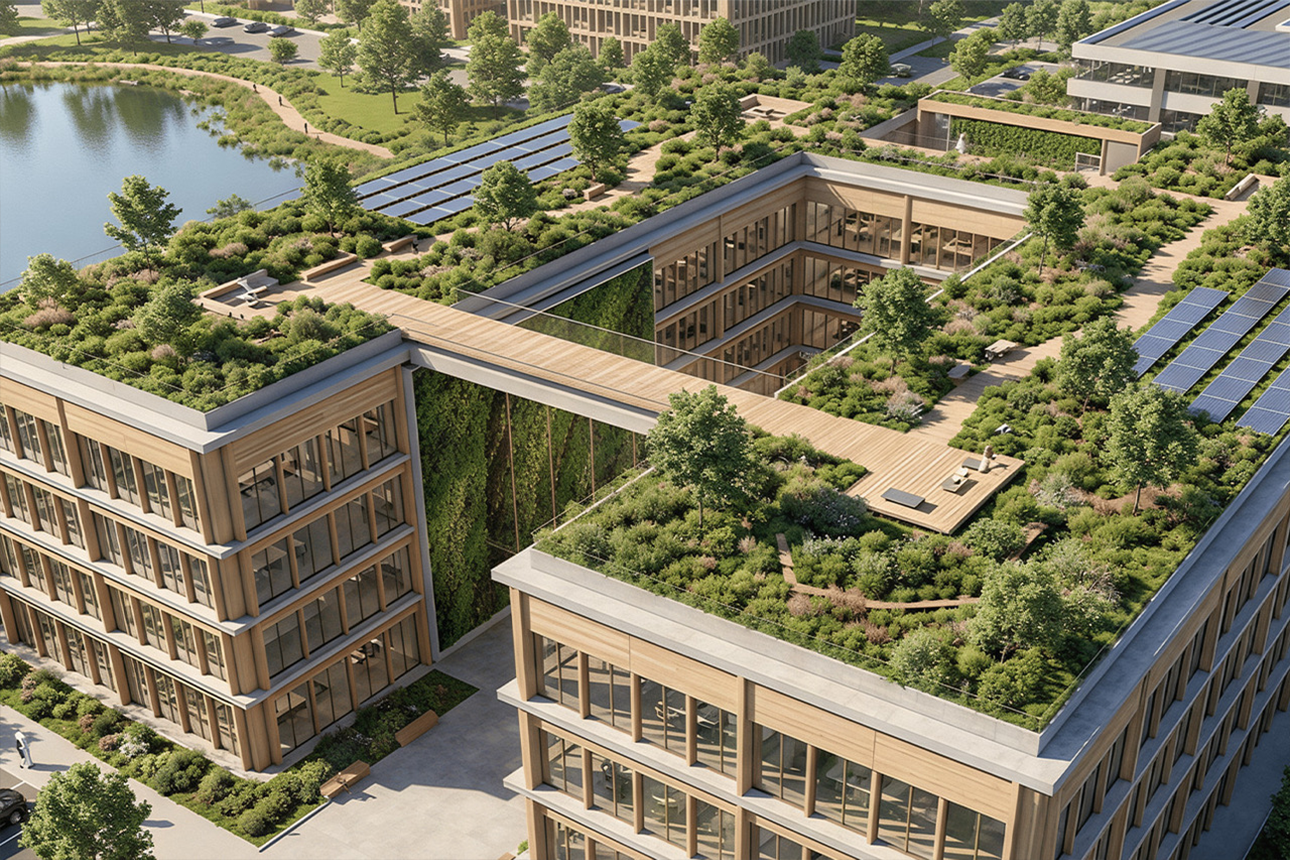
Green roof systems for roofs and terraces
What is a green roof?
A green roof is a sustainable solution that transforms roofs and terraces into functional green spaces. By installing vegetation on otherwise unused surfaces, green roofs maximize outdoor space in both urban and private settings while improving the environmental performance of buildings.
As cities become denser, green roofs are playing an increasingly important role in sustainable architecture. They enhance the appearance of buildings, improve living comfort, support stormwater management, and provide long-lasting vegetation with minimal maintenance.
Brief history and evolution
The idea of roof gardens dates back thousands of years, with the famous Hanging Gardens of Babylon often cited as one of the earliest examples. Today, advances in engineering and green building technologies have made green roofs a practical solution for addressing climate change, reducing energy consumption, and improving urban environments.
The benefits of green roof systems
Energy savings and thermal insulation
One of the greatest advantages of a green roof is its ability to improve a building’s thermal performance.
The vegetation and growing medium create a natural insulating layer that reduces heat gain during summer while minimizing heat loss in winter. As a result, buildings require less energy for heating and cooling, lowering operating costs and helping reduce the urban heat island effect.
Increased biodiversity
Green roofs create valuable habitats for pollinating insects, birds, and other wildlife. By introducing vegetation into urban areas, they contribute to healthier ecosystems and promote biodiversity where natural green spaces are limited.
Improved air quality
Vegetation acts as a natural air filter by absorbing carbon dioxide (CO₂) and capturing airborne pollutants and fine particulate matter. This helps improve air quality and creates healthier urban environments.
Green roof system types
Green roof systems are designed to meet different structural reequirements, intended uses, and maintenance levels.
Why choose a green roof system?
Beyond their visual appeal, professionally designed green roof systems deliver long-term performance and measurable environmental benefits.
Key advantages include:
- Long-lasting durability through high-performance technical components
- Reliable roof protection and system performance
- Efficient stormwater management with drainage and water retention layers
- Technical support to help select the most suitable solution for each project
Choosing the right system improves building performance, protects your investment, and ensures long-term reliability.
1. Extensive green roof
A system designed for challenging applications, such as buildings with limited load-bearing capacity or non-accessible roof surfaces. It is a lightweight and highly sustainable solution.
Typical Layer Structure
- Vegetation: Sedum mat
- Growing medium (substrate): 8 cm
- Filter fabric: 110 g/m²
- Drainage and water retention panel: 25 mm
- Protection fleece: 300 g/m²
- Slip layer / root barrier (if required)
- Roof structure with root-resistant waterproof membrane
Key Advantages
- Improved rainwater management
- Reduced thermal impact
- Low maintenance
- High overall sustainability
2. Semi-intensive green roof
An ideal solution for terraces and roof areas directly connected to living spaces.
Typical Layer Structure
- Vegetation: Sedum plus herbaceous and aromatic plants
- Growing medium (substrate): 12–18 cm
- Filter fabric: 150 g/m²
- Drainage and water retention panel: 4 cm
- Protection fleece: 300 g/m²
- Roof structure with root-resistant waterproof membrane
3. Intensive green roof
A system suitable for full-scale landscape design projects, featuring substantial substrate depth.
Typical Layer Structure
- Vegetation: Lawn, shrubs, and trees
- Growing medium (substrate): More than 20 cm (up to 55 cm or more)
- Filter fabric: 200 g/m²
- Drainage and water retention panel: 60 mm
- Protection fleece: 500 g/m²
- Roof structure with root-resistant waterproof membrane
Practical opportunities offered by green roof gardens
Enhanced living comfort
Green roofs do more than improve a building’s appearance. They help reduce urban noise, regulate indoor temperatures, and create attractive outdoor spaces where people can relax and enjoy nature.
Increased property value
A well-designed green roof enhances both the visual appeal and market value of a property, making buildings more attractive to buyers, tenants, and investors.
Solutions for limited spaces
Modern modular systems make it possible to install green roofs even on relatively small rooftops and terraces, turning underused areas into functional green spaces.
VerdeProfilo®‘s role in green roof design
VerdeProfilo® develops advanced modular systems for roofs, terraces, and architectural landscapes.
Working closely with architects, designers, and contractors, the company provides complete green roof solutions that integrate drainage systems, containment edging, inspection chambers, and components for sloped roofs to ensure long-term performance and reliability.
Water management and technical accessories
Effective stormwater management is a fundamental aspect of green roof systems. Modern solutions include:
- Retention and attenuation systems for heavy rainfall events
- Additional layers for controlled water storage
- Advanced drainage panels that reduce immediate runoff
Innovative materials such as hydrophilic mineral wool (for example, DiaWool-type systems) further improve water retention within the growing medium.
Technical accessories—including drainage channels, inspection chambers, and containment edging—help simplify maintenance while increasing system efficiency and durability.
Case studies: Green roofs on buildings and terraces
Successful examples in Italy
Across Italy, green roofs are becoming an important tool for urban regeneration.
Completed projects demonstrate measurable improvements in thermal insulation, living comfort, sustainability, and the overall usability of outdoor spaces.
Benefits and opportunities of green roof gardens
Green roofs offer an effective way to improve energy efficiency, increase biodiversity, manage stormwater, and create healthier, more attractive buildings.
Whether you’re designing a new building or renovating an existing one, VerdeProfilo® can help you develop a customized green roof solution that combines sustainability, innovation, and long-term performance.
Contact our team to learn how architectural greenery can transform your next project.
FAQ: Green roof systems for roofs and terraces
What is a green roof for roofs and terraces?
A green roof is a system that transforms rooftops and terraces into functional vegetated surfaces, enhancing aesthetics, comfort, and building sustainability.
What are the main benefits of green roof systems?
The primary benefits include thermal insulation, energy savings, improved air quality, increased biodiversity, and enhanced property value.
Does a green roof require extensive maintenance?
Maintenance requirements depend on the type of system installed. Modern modular solutions are designed to minimize maintenance, especially when properly designed and installed.
Can a green roof be installed on any terrace?
In many cases, yes. However, a preliminary structural assessment is required to evaluate load-bearing capacity, waterproofing, and the technical condition of the surface.
How much does a green roof increase property value?
There is no fixed percentage, but the presence of green spaces on roofs and terraces significantly increases a property’s attractiveness and competitiveness in the real estate market.